

Maintaining soil fertility
Phosphorus and potassium fertilization
Sustainable crop production requires replacing the nutrients removed with each harvest. Continuous removal of phosphorus (P) and potassium (K) without replenishment gradually depletes soil reserves, reducing yield potential and long-term soil fertility.
Although adequately supplied soils may show only a limited short-term yield response to P and K fertilisation, replacing nutrient offtake is essential to maintain soil fertility and preserve future productivity.
Phosphorus plays a key role in:
Root development and early crop establishment
Energy transfer and plant metabolism
Tillering and crop vigor
Flowering, grain formation, and maturation
A sufficient phosphorus supply is particularly important during early growth stages, when a strong root system lays the foundation for high yields.
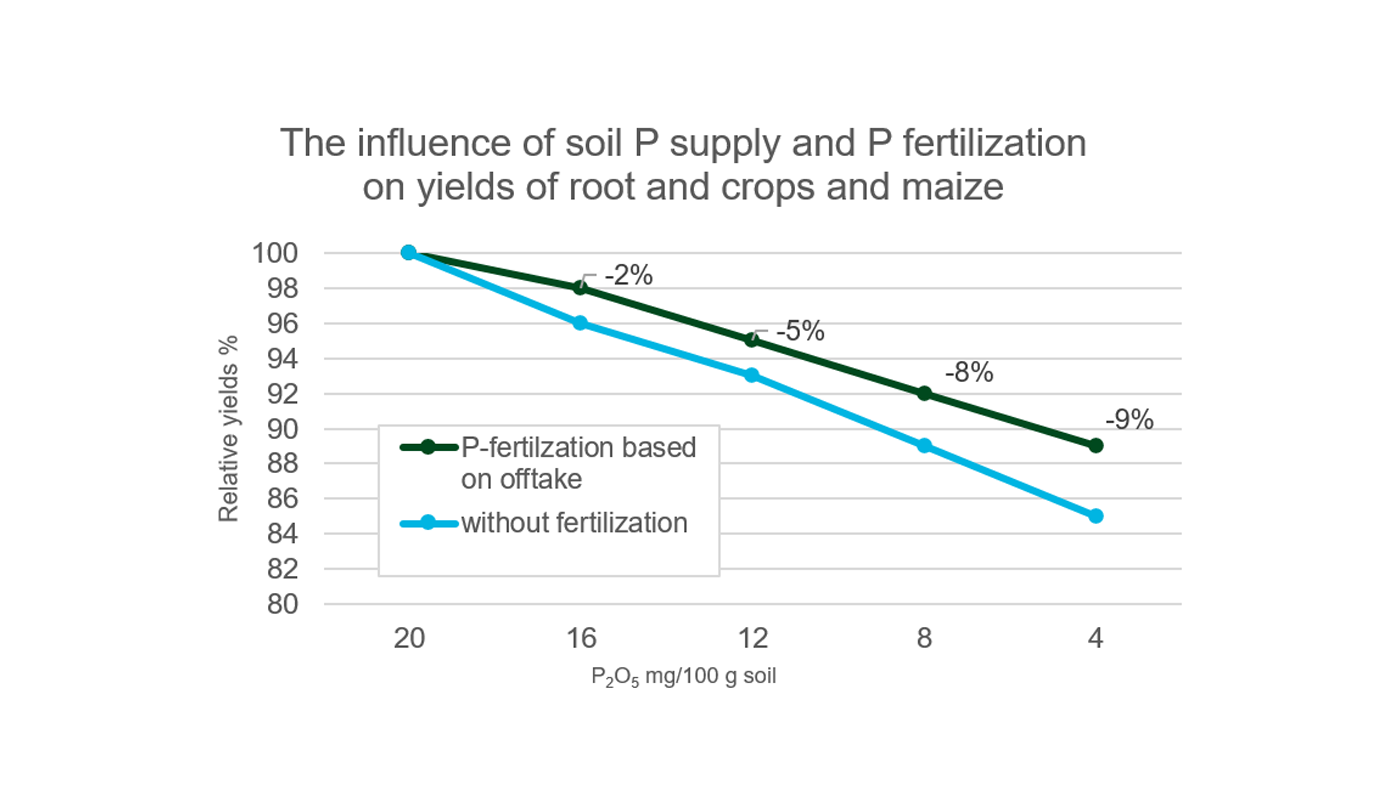
Figure: Decline of yields with declining soil P supply (CAL extraction). Fertilising does not fully compensate for the yield loss (LFL Agrarökologie, 2008).
Potassium is often referred to as the "quality nutrient" because it supports:
Efficient water use and drought tolerance
Resistance to heat and water stress
Disease tolerance and crop resilience
Nutrient transport within the plant
Yield formation and product quality
Adequate potassium nutrition helps crops maintain performance under challenging growing conditions and improves the efficient use of water and nitrogen.
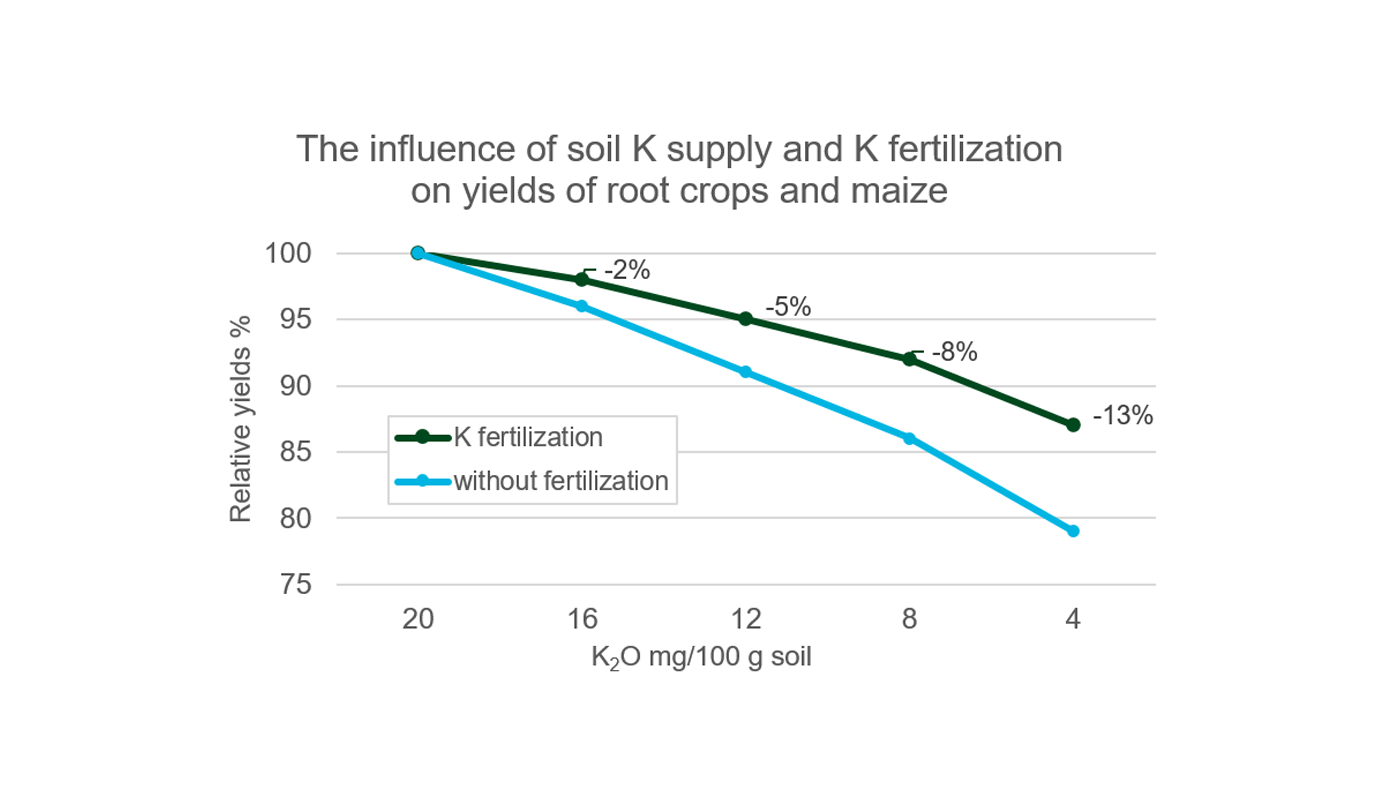
Figure: Decline of yields with declining soil K supply (CAL extraction). Fertilizing does not fully compensate for the yield loss (LFL Agrarökologie, 2008).
Factors Influencing P and K Requirements
Determining the right nutrient strategy
Crop nutrient demand
Soil P and K supply
Expected yield and nutrient removal
Fertilisation history
Organic manures and crop residues
Maintaining Soil Fertility
Protecting productivity for the long term
Preserves long-term productivity
Maintains yield potential and crop quality
Prevents depletion of soil nutrient reserves
Improves nutrient (nitrogen) use efficiency
The yield value of phosphorus fertilisation
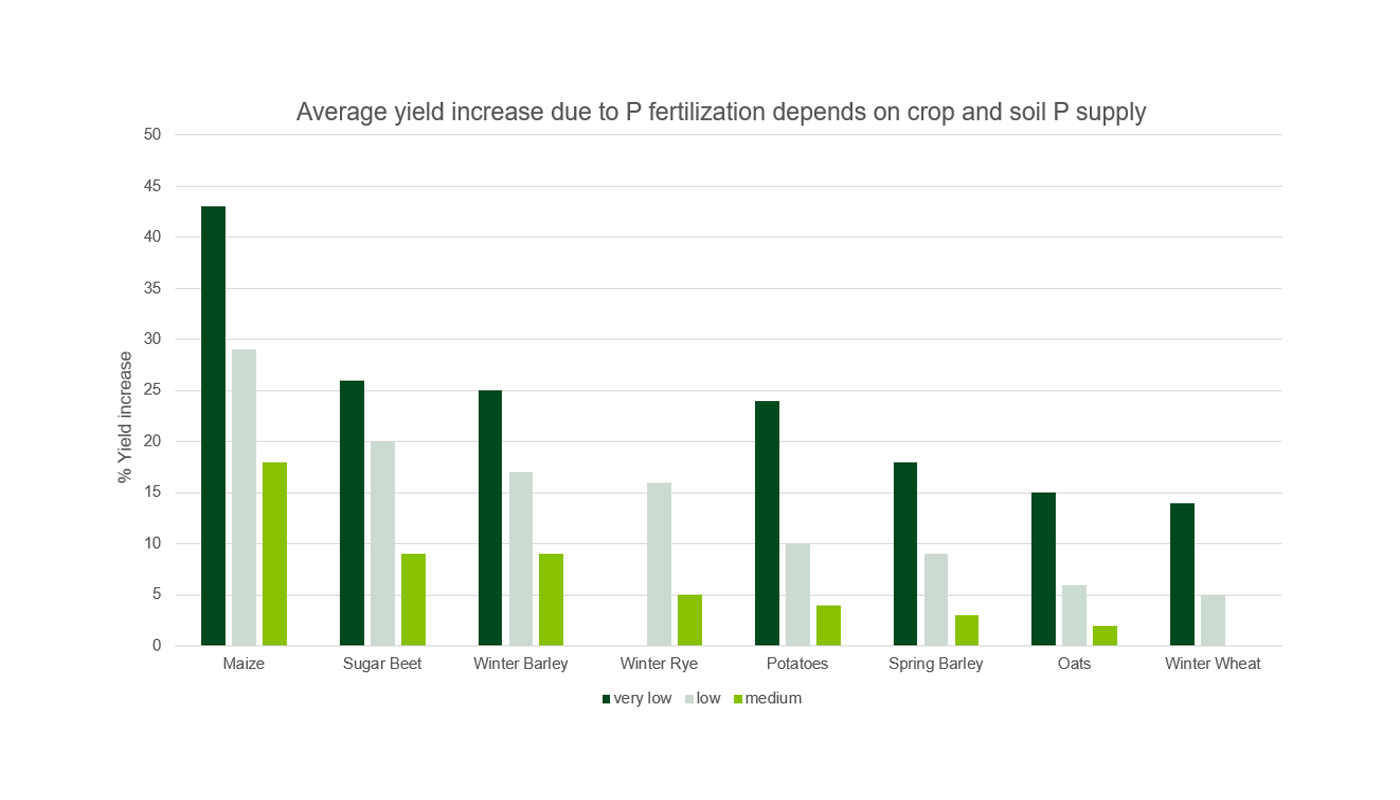
Figure shows that maize yields increase due to P fertilisation even on soils with sufficient P supply (medium).
The yield impact of potassium fertilisation
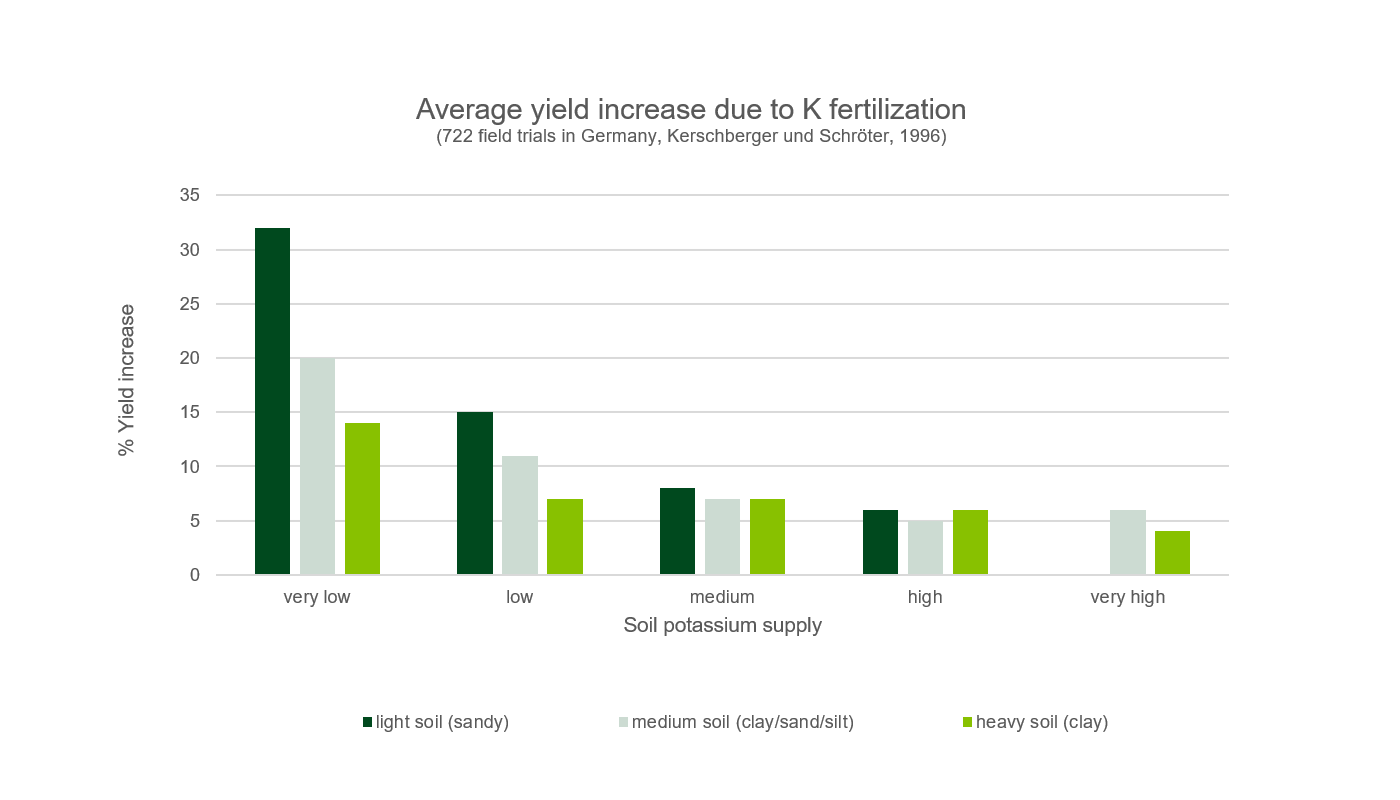
The lower the K supply in the soil, the bigger the effect of the K fertilisation on the yield.
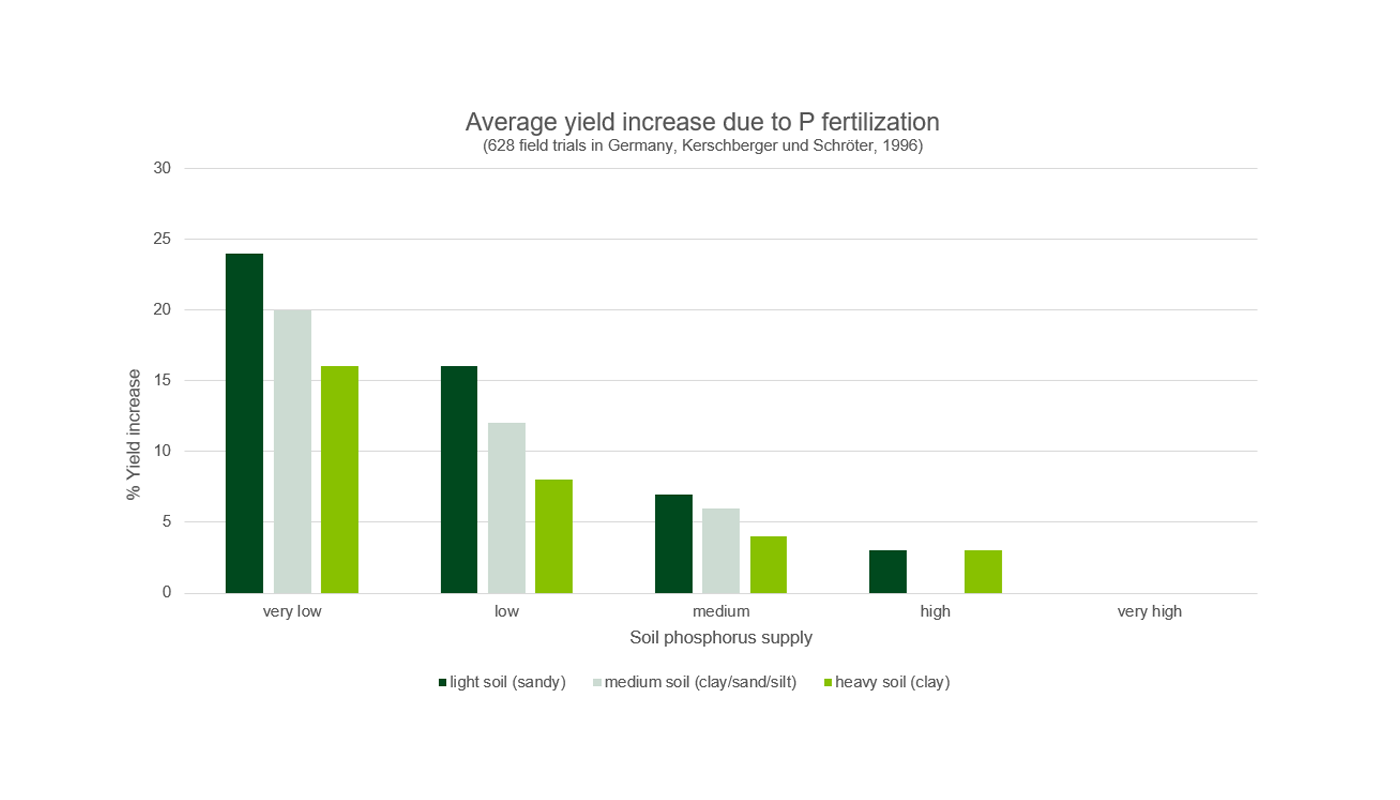
Greater yield benefits where phosphorus is needed most
The lower the P supply in the soil, the bigger the effect of the P fertilisation on the yield.

Nutrient balances with NutriGuide®
NutriGuide® helps optimize phosphorus and potassium management by calculating nutrient balances for individual crops or entire crop rotations.