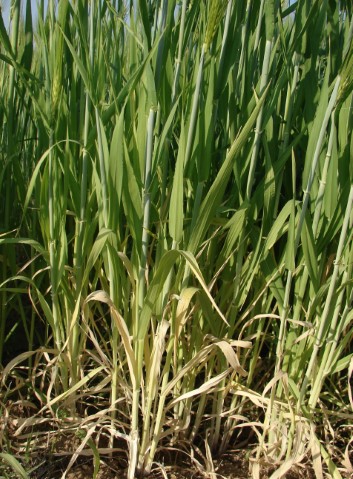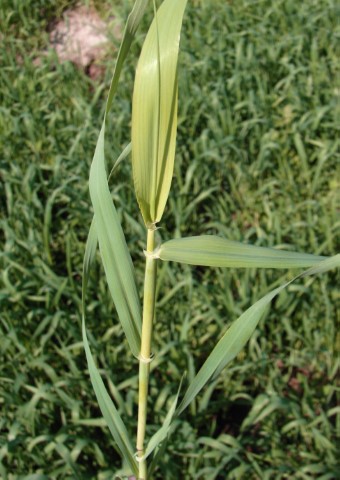

The overall performance is constrained by the weakest component
The importance of a balanced nutrition
Plants require a balanced supply of essential nutrients to achieve optimum growth, yield, and quality. Nitrogen (N), phosphorus (P), and potassium (K) are the primary nutrients, while sulphur (S), calcium (Ca), magnesium (Mg), and micronutrients also play vital roles.
According to the Law of the Minimum, crop growth is limited by that nutrient shortest in supply. Even if all other nutrients are available in sufficient quantities, a deficiency of a single nutrient can restrict yield and nutrient use efficiency.
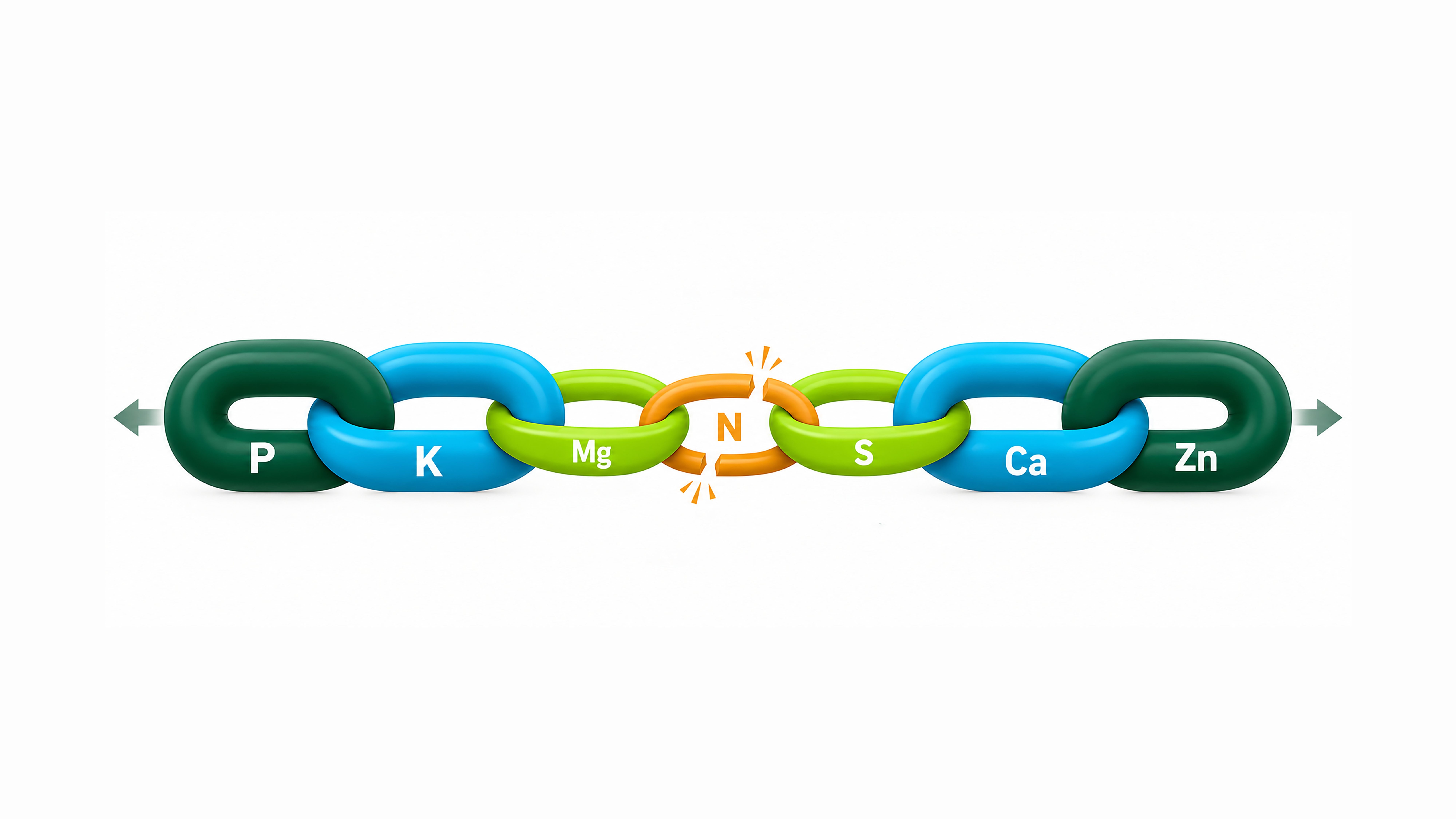
Balanced Nutrition Matters
A balanced nutrient supply:
Maximizes yield and crop quality
Improves nutrient use efficiency
Supports root development and early growth
Enhances crop resilience to stress
Prevents hidden nutrient deficiencies
Balanced Nutrition Matters
Nutrient requirements depend on:
Crop type and yield target
Soil fertility and nutrient availability
Previous crop and crop residues
Organic nutrient inputs
Weather and growing conditions
Balanced nutrition in every granule
LAT Nitrogen's NPK+S COMPLEX fertilisers provide multiple nutrients in every granule, ensuring a uniform distribution of nutrients throughout the field and supporting balanced crop nutrition throughout the growing season.
Benefits
Balanced nutrition for stronger growth
Balanced supply of N, P, K, and S
Uniform nutrient distribution
Improved nutrient uptake efficiency
Better crop establishment and development
Higher yield and quality potential

Build a balanced nutrition strategy
Find the best-fitting NPK product for your farm by creating a fertilisation plan with NutriGuide®.
Nitrogen and sulphur
Nitrogen (N) and sulphur (S) work closely together in plant metabolism and are both essential for protein formation. Because proteins contain both nutrients, an adequate sulphur supply is required to make efficient use of nitrogen.
In most crops, the typical N:S ratio in plant proteins is around 15:1, although crops with a high sulphur demand, such as oilseed rape, require relatively more sulphur.
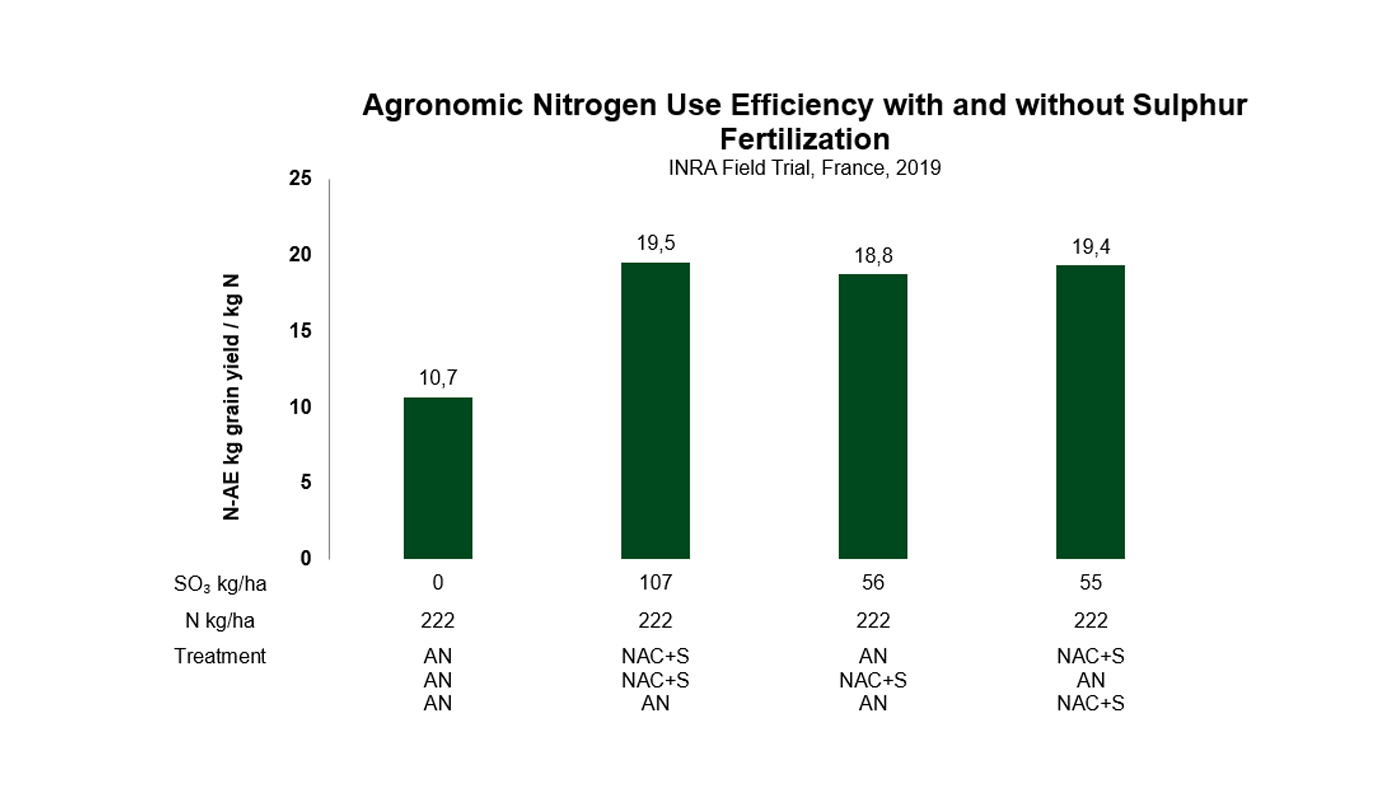
Nearly doubling nitrogen use efficiency
The efficiency of nitrogen fertilization expressed as kg grain yield per kg of nitrogen fertilization is almost doubled when nitrogen is fertilized together with sulphur. AN= ammonium nitrate, NAC+S = calcium ammonium nitrate and sulphur (MYNITRAS).
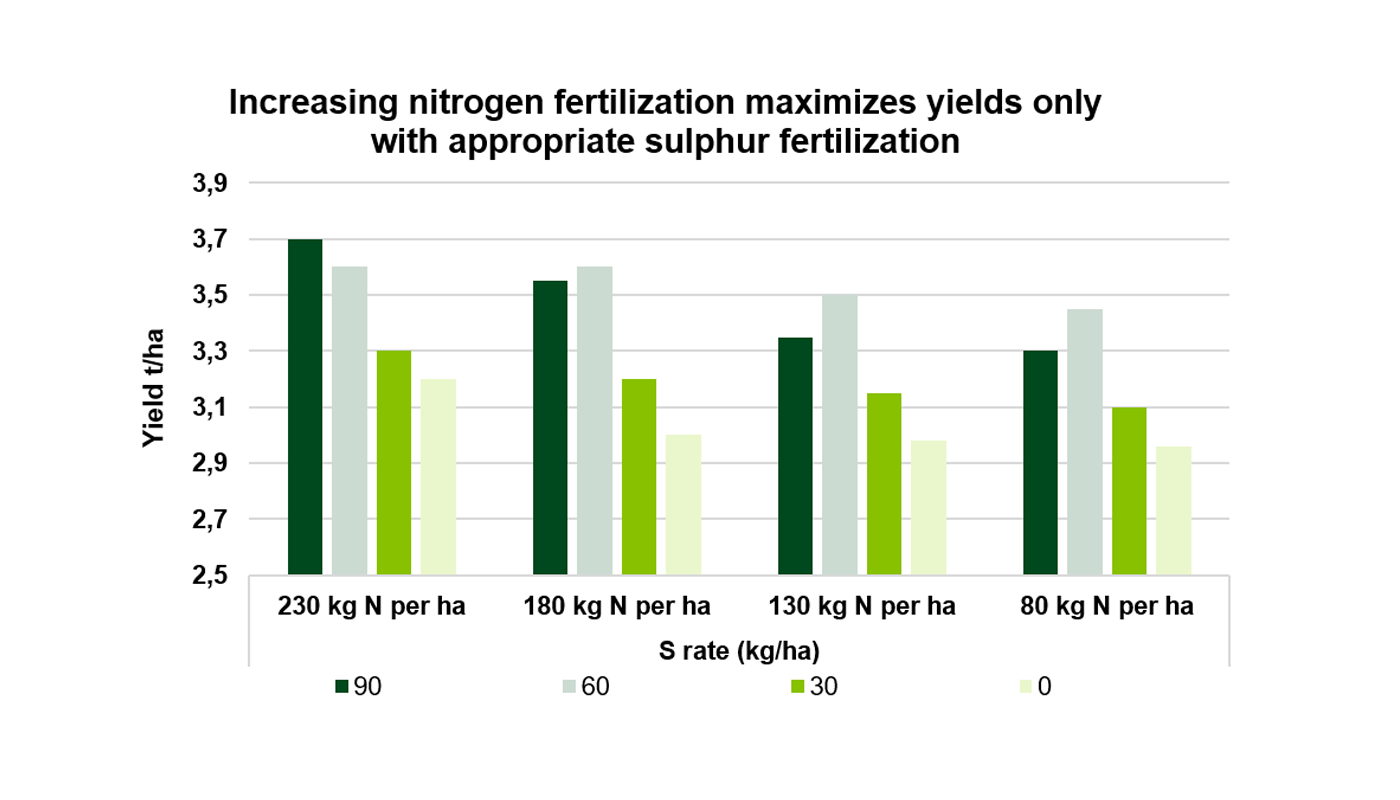
Unlocking greater yield potential
Yield response of winter oilseed rape to S application at increasing rate of N fertilizer. Ghatei et al. 2013: International J. of Agronomy and Plant Production 4 (12): 3255 – 3261
Why Sulphur Matters
The essential role of sulphur in crop nutrition
Improves nitrogen use efficiency
Supports protein synthesis and crop quality
Helps maximize yield potential
Particularly important for high-yielding crops and oilseeds
According to the Law of the Minimum, a deficiency of either nutrient limits the effectiveness of the other. Excessive nitrogen application can induce sulphur deficiency, while insufficient sulphur restricts nitrogen uptake and utilization.
Identifying sulfur deficiency
Because nitrogen and sulphur are involved in many of the same physiological processes, deficiencies of both nutrients often result in yellowing (chlorosis) of the crop. The key difference lies in where the symptoms first appear:
Nitrogen deficiency appears first on older leaves, with yellowing progressing from the leaf tip towards the base.
Sulphur deficiency appears first on young leaves, as sulphur is less mobile within the plant.
Correct identification of these symptoms is important to ensure the appropriate nutrient is applied and crop performance is not compromised.
Balanced nitrogen and sulphur nutrition is essential for maximizing yield, crop quality, and fertilizer efficiency.