

Guidelines for the safe handling of fertilisers
Storing fertilisers safely and responsibly
Country-specific legal regulations apply to the storage of fertilisers containing ammonium nitrate. In addition, manufacturers and industry associations issue guidelines and best practice recommendations for safe storage. Adhering to these requirements ensures product quality and to mitigate potential risks to human health and safety, as well as to the environment. This includes preventing adverse impacts such as contamination of groundwater and surface water.
Fertilisers are categorised into distinct groups based on the proportion of ammonium nitrate (AN) and the composition of other constituents. These classifications determine their regulatory status, including their designation under transport regulations (ADR), as well as applicable requirements for storage, handling, and personal protective measures. Details can be found in the safety data sheets and on www.lat-nitrogen.com. The compound fertilisers supplied by LAT Nitrogen are, in general, classified as not capable of self-sustaining thermal decomposition.

Bulk fertiliser storage
Maintaining product quality
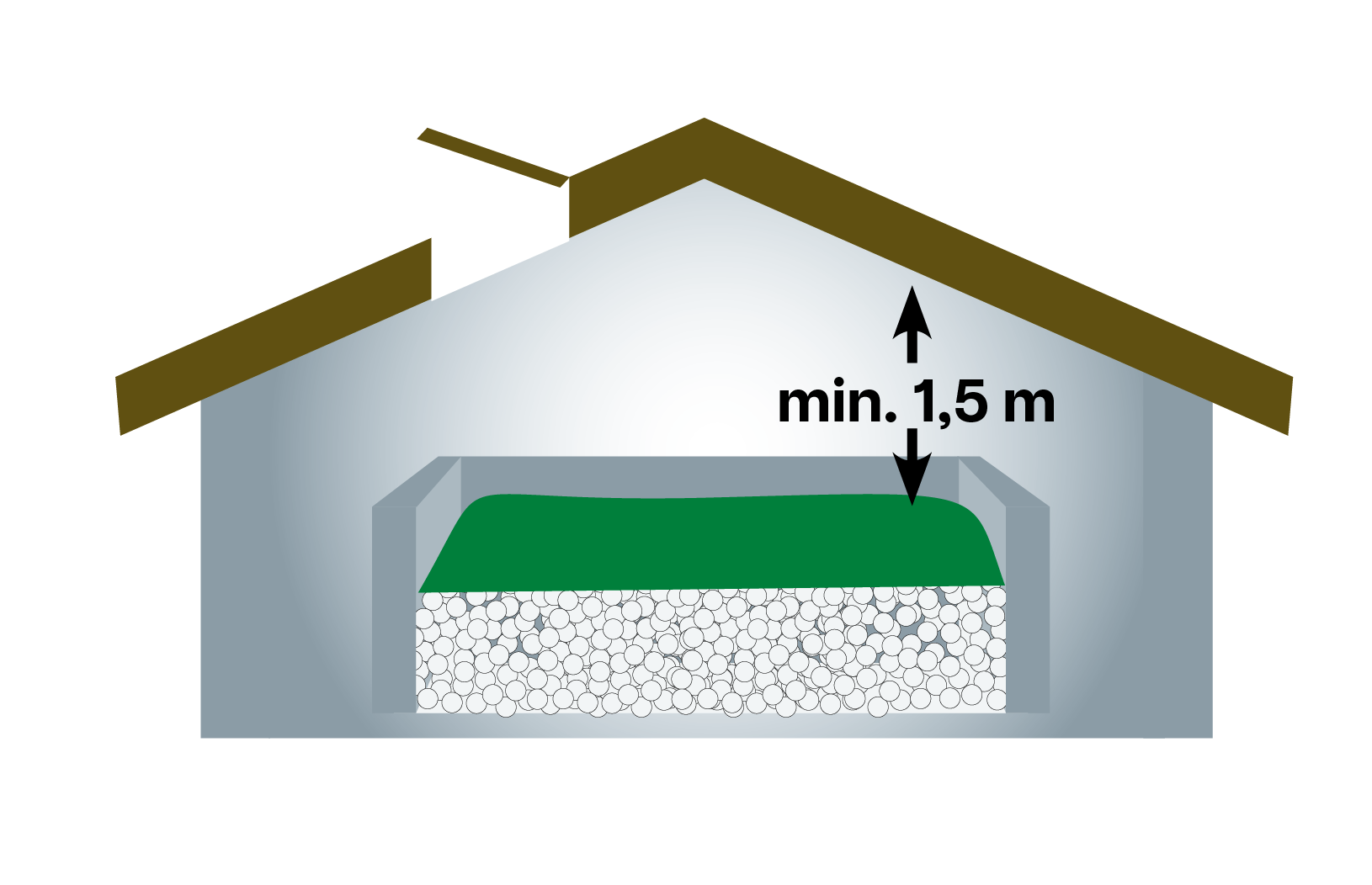
Avoid heat sources, storage temperatures above 32 °C and, where possible, temperature fluctuations. Use a ventilation system and maintain sufficient distance between the fertiliser and the roof.
Work according to the “First In – First Out” (FIFO) principle and keep up‑to‑date stock records.
When storing in bulk, keep AN‑based fertilisers (e.g. CAN, NPK, etc.) separate from Urea.
Fertilisers should always be stored in a clean, dry environment. Where flooring is not adequately protected against moisture ingress, LAT Nitrogen recommends the use of zeolite-based moisture absorbers (e.g. Terraperl or Lithosoil 300) as a bedding layer.
An application rate of approximately 1–2 kg per m² is recommended.
Protecting bagged fertilisers during storage
Prevent water ingress caused by leaking roofs, open doors or permeable floors. Where necessary, store fertiliser bags on pallets to reduce contact with moisture.
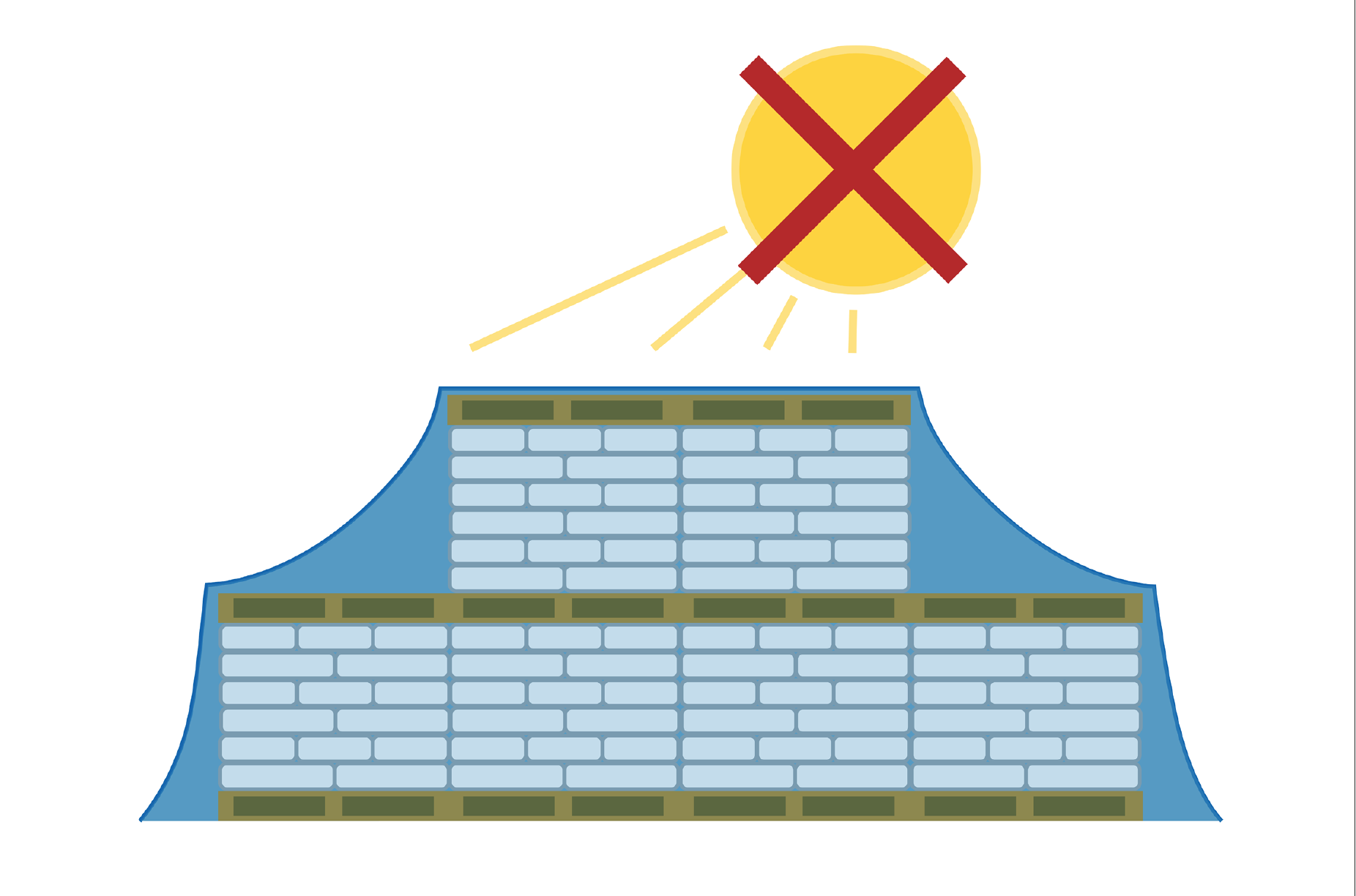
Fertilisers should preferably be stored in fully enclosed buildings. If this is not possible, a canopy roof should be used, and the goods must be protected from direct and indirect sunlight, including sunlight entering through windows.
When fertilisers are stored outdoors, bags must never be exposed to direct sunlight. Select a well-ventilated, shaded area for storage. If shading is not available, cover the bags with a light-coloured sheet, ensuring it does not rest directly on the bags. Placing a layer of pallets between the bags and the covering sheet helps maintain adequate ventilation and protection.
Plexiglass and similar materials do not provide adequate protection against direct sunlight.
Essential requirements for safe fertiliser storage
Smoking, eating and drinking are prohibited in fertiliser storage areas.
Fertilisers must be strictly stored separately from:
Petrol and other flammable liquids
Organic or combustible materials such as oils, fats, sawdust, grain, seeds, grass, straw, and hay
Metal salts, including chromates and compounds of zinc, copper, nickel, and cobalt
Compressed gases and plant protection products
Strongly alkaline substances, such as quicklime, cement, or metal slag powder
Chemicals such as hydrochloric acid, sulphuric acid, potassium chloride, ammonium sulphate, and sodium chloride
Hot objects, surfaces, and sources of heat, such as ovens, welding or grinding equipment, lighting fixtures, electrical switches and cables, and machinery parts that get hot during operation.”
Vehicles may enter the storage area only for loading and unloading purpose All vehicles must be in proper working condition and free from oil or fuel leaks.
Safe handling of fertilisers
To avoid damaging lifting loops, use only forklift tines with rounded edges (minimum radius: 5 mm).
Place Big Bags on level surfaces and secure the load during transport.
Take care when filling the fertiliser spreader and open the bags / Big Bags gently.
Keep people away from lifting operations and transport vehicles.
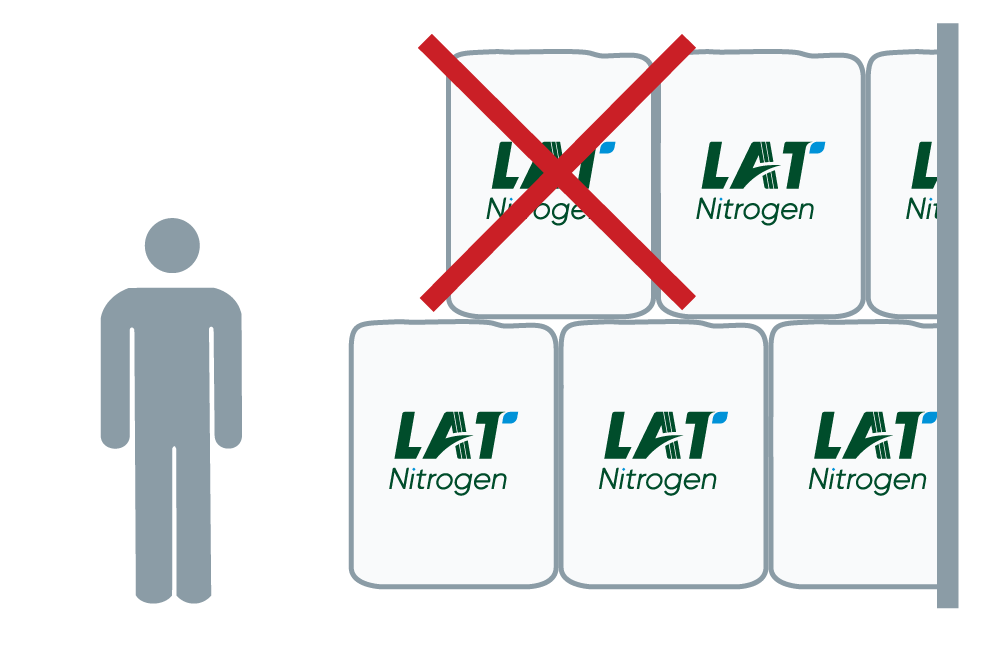
Avoid damaging the product. Ensure Big Bags stand securely and cannot topple over.
Wear a high‑visibility vest in the storage area.
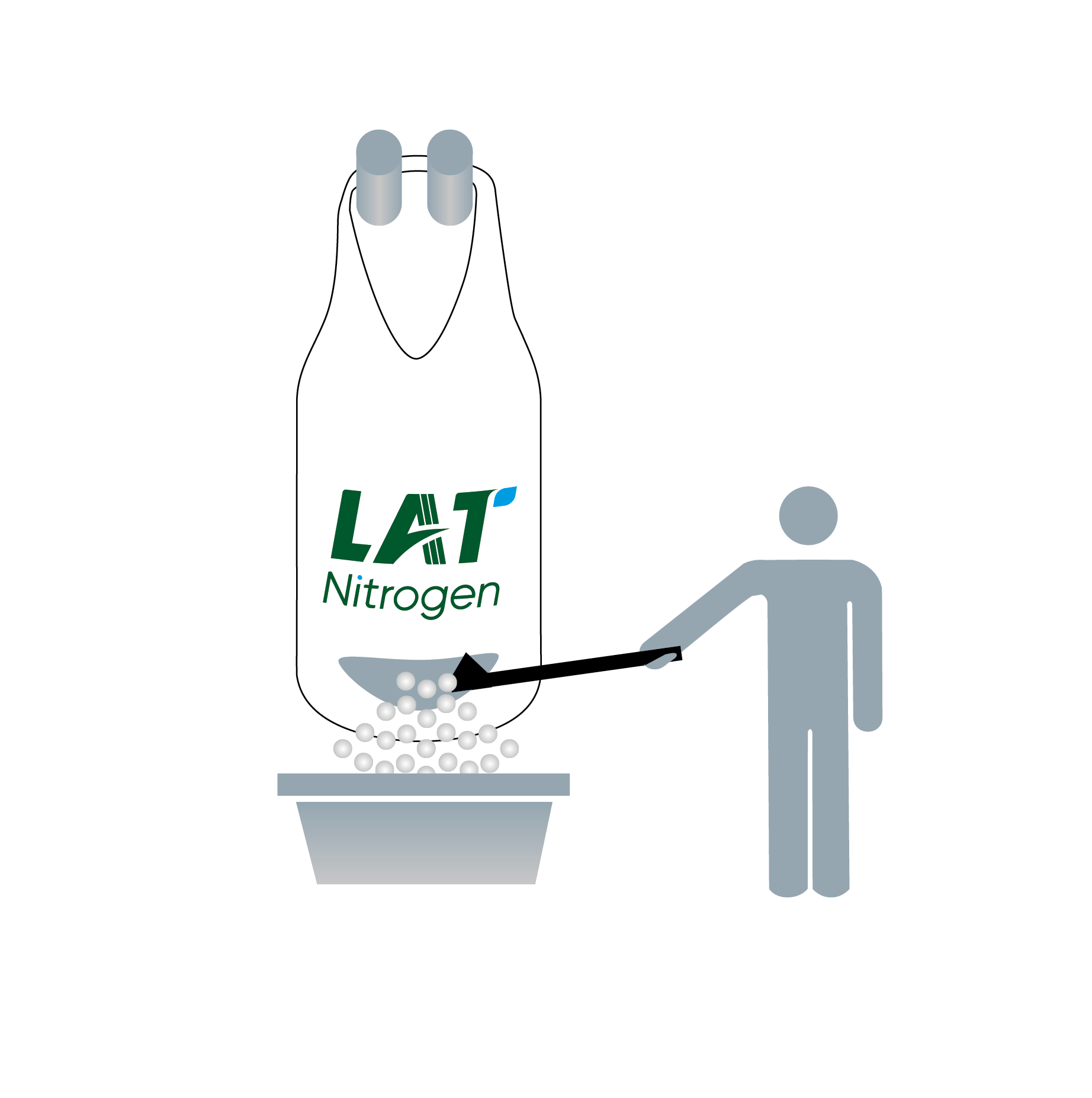
Cut Big Bags diagonally at the bottom using a lance and never stand beneath them. Using a discharge slider is the safest method of emptying.
Empty fertilizer big bags are not reusable. The recycling symbols demonstrate LAT Nitrogen’s commitment to environmental protection and recycling.
Risks associated with fertilisers
Exposure to heat can trigger chemical reactions that release toxic gases, such as nitrogen oxides or ammonia.
When stored correctly, AN‑containing fertilisers are safe. However, a combination of external factors can create a detonation risk, especially for products with high nitrogen content (>28% N from AN):
Extreme heat that can cause melting and decomposition
Pressure buildup from gas emissions without adequate ventilation (especially in closed containers)
Contamination with fuels, oil, organic matter, metal salts (e.g., copper sulfate), or pesticides
Situations that could trigger explosions (gas cylinders, explosives)
For detailed safety information, see the safety data sheets at www.lat-nitrogen.com

Simple measures for safe fertiliser handling
Avoid dust formation and thereby avoid skin, eye and clothing contact.
Clean and regularly inspect your personal protective equipment (PPE).
What to do in the event of a fire
Ensure that the current storage and emergency plan is known to all employees and easily accessible.
In case of fire or smoke:
1. Notify the fire brigade (UK: 999 or 112 – European emergency number) and state the location and type of fertiliser involved.
2. Do not inhale smoke.
3. Evacuate the area.
4. Evacuate others only if it does not endanger your own safety.
5. Secure machinery and electrical equipment (e.g. unplug electrical devices).
Extinguish only with plenty of water. Do not use chemical extinguishers, foam, or sand on AN-based fertilizers, as this can promote decomposition. Ensure that extinguishing water does not enter surface or groundwater.
Requirements for ammonium nitrate fertilisers
The following requirements apply to fertilizers containing at least 16% total nitrogen from AN (at least 8% nitrate nitrogen and 8% ammonium nitrogen), in accordance with EU Regulations (EC) No. 1907/2006 (REACH) and (EC) No. 2019/1148.
Protect fertiliser storage areas from unauthorised access.
Check stock regularly and keep inventory lists up to date to detect theft early.
Never store fertilisers in publicly accessible areas.
Immediately report shortages or uncontrolled losses to the police and the competent national authority.
Supply only to professional users.